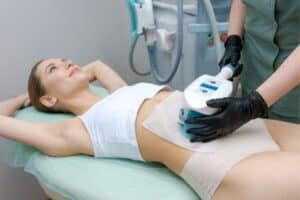
If you’ve been researching non-surgical fat reduction, you’ve probably come across CoolSculpting. It’s one of the better-known names in fat freezing, but what happens during treatment, and how does it differ from other cryolipolysis procedures?
Understanding the technology, its limitations, and the possible risks can help you decide whether this cosmetic treatment is worth exploring.
At LA LIPO, we offer cryolipolysis (fat freezing) treatments in customers’ homes. CoolSculpting is a specific branded system, and although it uses the same general cooling principle, it should not be confused with every other cryolipolysis device.
What Is CoolSculpting Liverpool?
CoolSculpting is a branded cosmetic procedure that uses controlled cooling to target selected areas of fat beneath the skin.
The technology is known as cryolipolysis, often called fat freezing.
Rather than surgically removing fat, cryolipolysis exposes the selected tissue to carefully controlled low temperatures. Fat cells are particularly sensitive to cold, and the treatment is intended to cause damage to some of these cells.
Over time, the body processes the affected cells, which may reduce the visible fat bulge.
CoolSculpting is intended for body contouring, not overall weight loss. It cannot treat obesity or replace a balanced diet and regular physical activity.
How Does CoolSculpting Liverpool Work?
The procedure begins with an assessment of the area you want to treat.
Your practitioner will determine whether the fat is suitable for the applicator, review your medical history, and explain what the procedure may realistically achieve.
During treatment, the practitioner positions an applicator over the selected area. Depending on the equipment, suction draws tissue into the applicator while controlled cooling is delivered.
You may initially feel pulling, pressure or intense cold. The area can become numb as the treatment continues.
The cooling process is intended to damage some of the fat cells beneath the skin. The body then gradually clears affected cells through its normal biological processes.
Changes, where they occur, develop over weeks or months rather than immediately.
Although cryolipolysis does not require surgical incisions, it can still cause adverse reactions and complications.
Is CoolSculpting the Same as Cryolipolysis Liverpool?
Not quite.
Cryolipolysis is the cooling technology, while CoolSculpting is one branded system.
Other manufacturers produce fat-freezing equipment using similar principles, but the machines are not necessarily interchangeable.
Differences may include the applicator design, cooling settings, treatment protocols, approved uses and available clinical evidence.
LA LIPO offers cryolipolysis treatments Liverpool rather than the branded CoolSculpting procedure.
Research involving CoolSculpting cannot automatically be used to establish the effectiveness or safety of a different fat-freezing machine.
Which Areas Can Be Considered for Fat Freezing Liverpool?
Cryolipolysis is generally used for localised areas of subcutaneous fat, meaning fat situated directly beneath the skin.
Depending on the equipment and individual suitability, areas considered for treatment may include:
- Abdomen
- Flanks
- Thighs
- Upper arms
- Back
Not every machine is intended for every body area. The manufacturer’s instructions, available evidence and your individual assessment determine which areas may be appropriate.
Cryolipolysis does not treat visceral fat, which sits deeper within the abdomen around internal organs.
What Results Can You Expect?
Cryolipolysis aims to reduce the appearance of a selected fat bulge, not produce significant overall weight loss.
Some people may notice a change in the contour of the treated area over the following months. Others may experience little visible improvement.
Several factors can affect the outcome, including the amount and distribution of fat, the device used, treatment settings and individual response.
It is also important to understand that reducing fat does not necessarily improve loose skin. In some cases, skin laxity may become more noticeable.
Results cannot be guaranteed, and additional treatment is not always appropriate.
Any specific claim about the amount of fat reduction achievable with a particular device should be supported by suitable clinical evidence.
Are CoolSculpting Liverpool Results Permanent?
Cryolipolysis is intended to damage selected fat cells, which the body may subsequently clear.
However, this does not mean that the treated area will maintain the same appearance indefinitely.
Fat cells remaining in the area can still increase in size, and changes in weight, ageing and skin elasticity can influence body contours.
It would therefore be misleading to promise permanent body shaping or suggest that future weight gain cannot affect the area.
Does CoolSculpting Liverpool Hurt?
Experiences vary.
During cooling, you may feel strong cold sensations, pressure, pulling or discomfort. Some people experience numbness as treatment progresses.
Afterwards, the area may feel tender, swollen or sensitive.
Although many people can return to normal activities relatively soon, this does not mean the procedure is painless or that everyone will experience an uncomplicated recovery.
What Are the Risks of Cryolipolysis Liverpool?
Fat freezing is non-surgical, but it is not risk-free.
Possible side effects and complications include:
- Redness, bruising and swelling
- Pain, tenderness or sensitivity
- Numbness, tingling or altered sensation
- Firmness or changes in tissue texture
- Uneven contours or asymmetry
- Cold-related skin injury, including burns or blistering
- Persistent discomfort or nerve-related symptoms
A particularly important complication is paradoxical adipose hyperplasia (PAH).
This occurs when fat tissue in the treated area enlarges instead of shrinking. The area may become noticeably firmer or develop an unusual shape.
PAH is uncommon, but it can be persistent and may require medical or surgical management.
Your practitioner should discuss this risk, along with other potential complications, before treatment.
Seek medical advice if you develop severe or worsening pain, significant skin changes, or an unexpected persistent enlargement of the treated area.
Who Should Avoid Cryolipolysis Liverpool?
Not everyone is suitable for fat-freezing treatment.
Certain cold-sensitive conditions, including cryoglobulinaemia, cold agglutinin disease and paroxysmal cold haemoglobinuria, may make treatment inappropriate.
Other circumstances that require careful assessment include:
- Pregnancy or breastfeeding
- Circulation or sensation problems
- Hernias in or near the proposed treatment area
- Damaged, infected or inflamed skin
- Previous surgery or procedures affecting the area
- Relevant medical conditions or medications
This is not a complete list. Contraindications depend on the particular device and its instructions for use.
A practitioner should review your health information and explain whether treatment is appropriate before proceeding.
CoolSculpting Liverpool vs Liposuction: What’s the Difference?
Both procedures are associated with body contouring, but they work very differently.
CoolSculpting works by cooling targeted fat beneath the skin without surgery. Changes in the treated area take time to develop, and some people may notice only a small difference.
Liposuction takes a different approach. It involves surgically removing fat through a suction device and may produce more noticeable changes to body contours. However, it also comes with the risks associated with surgery and usually requires a longer recovery period.
Neither procedure is intended as a general treatment for obesity.
The most suitable approach depends on the individual’s circumstances, expectations and medical suitability.
Frequently Asked Questions About CoolSculpting Liverpool
1. Is CoolSculpting a weight-loss treatment?
No. CoolSculpting is designed for localised body contouring, not significant weight reduction. The appearance of a treated area may change without a meaningful change in overall body weight.
2. How long does CoolSculpting take?
Treatment time depends on the device, applicator, area and number of cycles. Your practitioner should explain the expected appointment length before treatment.
3. When will I see results from fat freezing?
Changes may become noticeable over several weeks, with further development over the following months. Timing and response vary, and some people may not achieve the improvement they expected.
4. Can CoolSculpting Liverpool tighten loose skin?
CoolSculpting is primarily intended to reduce localised fat. It is not a treatment for significant skin laxity, and reducing underlying fat may sometimes make loose skin more noticeable.
5. Is CoolSculpting safe?
No cosmetic procedure is entirely without risk. CoolSculpting has been studied for certain intended uses, but potential complications include cold injury, persistent sensory changes and paradoxical adipose hyperplasia.
Always discuss suitability and risks before treatment.
6. Can fat return after CoolSculpting Liverpool?
The appearance of the treated area may therefore change over time, even where some fat cells have been cleared.
7. Is CoolSculpting the same treatment offered by LA LIPO?
No. CoolSculpting is a branded cryolipolysis system. LA LIPO offers fat-freezing treatments using cryolipolysis technology, but not the CoolSculpting-branded procedure.
8. How many fat-freezing treatments will I need?
This depends on the equipment, the treatment area and individual circumstances. Some people may not achieve their desired result, even after additional treatment. A consultation should establish realistic expectations rather than promise a particular number of sessions.
9. Can cryolipolysis treat belly fat?
Certain devices are intended for suitable subcutaneous fat on the abdomen. They do not treat deeper visceral fat. A practitioner must assess the area and determine whether the equipment is appropriate.
Understanding Your Fat-Freezing Options Liverpool with LA LIPO
If you’re considering non-surgical fat reduction, it’s worth understanding exactly which treatment and equipment are being offered.
At LA LIPO, we provide mobile cryolipolysis treatments in customers’ homes.
Before proceeding, you’ll need an individual assessment to discuss the proposed treatment area, your medical history, the possible risks and whether the treatment is suitable for you.
We’ll also explain the procedure’s limitations so you can make an informed decision without relying on promises of a particular cosmetic result.
Interested in finding out more?
Contact LA LIPO to discuss our home-based cryolipolysis service and arrange a suitability assessment.
Important information: This article provides general information about CoolSculpting and cryolipolysis. LA LIPO does not offer the CoolSculpting-branded procedure. Fat freezing carries risks, including cold-related injury, persistent sensory changes, uneven contours and paradoxical adipose hyperplasia. Treatment results vary, and no specific fat reduction or improvement in appearance can be guaranteed. Suitability and contraindications depend on the equipment used and individual medical circumstances. Seek independent medical advice where appropriate before undergoing a cosmetic procedure.