Fine lines around the eyes, changes in skin texture and a gradual loss of firmness are all common as we get older. You might notice your cheeks look less defined or that wrinkles remain visible even when your face is relaxed.
These changes are natural, but some people choose to explore cosmetic treatments to improve their skin’s appearance.
One option is RF microneedling, a procedure that combines fine needles with radiofrequency energy. It has been studied for concerns including wrinkles, uneven texture and mild skin laxity.
Before considering treatment, it’s worth understanding how it works, what the research suggests and where its limitations lie.
Why Does Skin Develop Wrinkles and Lose Firmness?
Our skin changes throughout life. Collagen and elastin help provide structure and elasticity, but the skin’s composition and ability to repair itself change with age.
Skin ageing is more than simply getting older. Several factors influence how our skin changes, some of which we can control more than others.
- Time spent in the sun: Years of UV exposure can gradually affect the skin, making wrinkles, uneven pigmentation and changes in texture more noticeable.
- Family genetics: Our genes play a part in how our skin ages. You might notice similar lines or changes in skin firmness to those your parents experience.
- Smoking: Smoking can affect the skin’s structure and is linked to earlier signs of ageing, including more pronounced wrinkles.
- Hormonal changes: Around menopause, falling oestrogen levels can affect how well the skin retains moisture and maintains its elasticity.
- Everyday facial expressions: Smiling, frowning and squinting all involve repeated muscle movements. Over time, the lines these expressions create can become more visible, even at rest.
Wrinkles and skin laxity are not quite the same thing.
Wrinkles are folds in the skin, while laxity describes reduced firmness or elasticity. Some people experience both, but the best treatment depends on which changes concern them.
What Is RF Microneedling Liverpool?
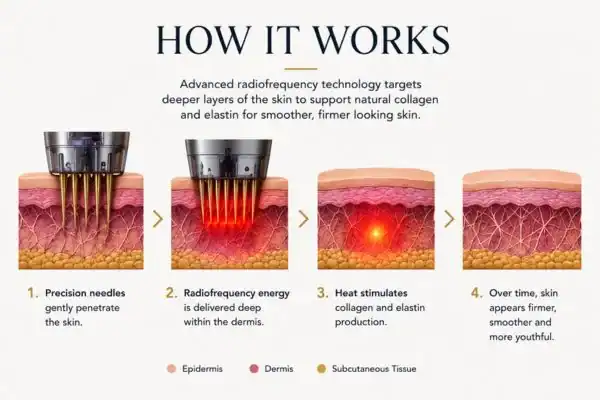
RF microneedling combines traditional microneedling with radiofrequency energy.
The device uses small needles to penetrate the skin at controlled depths while delivering radiofrequency energy into the tissue.
This creates a combination of mechanical injury and controlled heating, which can trigger processes involved in tissue repair and remodelling.
Studies have looked at how RF microneedling may help with fine lines, wrinkles and skin that has started to lose its firmness. The findings are encouraging in some cases, but that doesn’t mean everyone will see the same changes. The equipment used, how the treatment is performed, and your skin’s condition can all affect the results.
Because RF microneedling involves needles entering the skin and radiofrequency energy being delivered into the tissue, it needs to be carried out by a suitably trained practitioner. A proper consultation beforehand and clear aftercare advice are also important parts of the process.
Can RF Microneedling Liverpool Improve Wrinkles and Fine Lines?
Some clinical studies have reported improvements in aspects of facial skin appearance following RF microneedling.
These include changes in the appearance of fine lines, wrinkles and skin texture.
That doesn’t mean every wrinkle will disappear or that everyone will notice the same degree of improvement.
For example, fine surface lines may respond differently from deeper creases associated with facial movement or changes in facial volume.
It’s also important to distinguish between published research on particular devices and the results you can expect from an individual provider’s treatment.
Before proceeding, ask your practitioner what evidence supports the equipment and treatment protocol they intend to use.
Can RF Microneedling Liverpool Help Loose or Sagging Skin?
Skin laxity can develop around the cheeks, jawline, neck and other areas as the skin’s underlying structure changes.
RF microneedling has been investigated as a way of improving the appearance of mild to moderate laxity in selected patients.
However, the available evidence does not mean it can correct every degree of loose skin.
Someone experiencing early changes in firmness may have different treatment options from someone with substantial excess skin.
RF microneedling cannot physically remove excess skin and should not be described as an equivalent alternative to surgical lifting procedures.
A consultation can help determine whether the treatment is appropriate for the changes you want to address.
Understanding LA LIPO’s Collagen Lift Therapy Liverpool
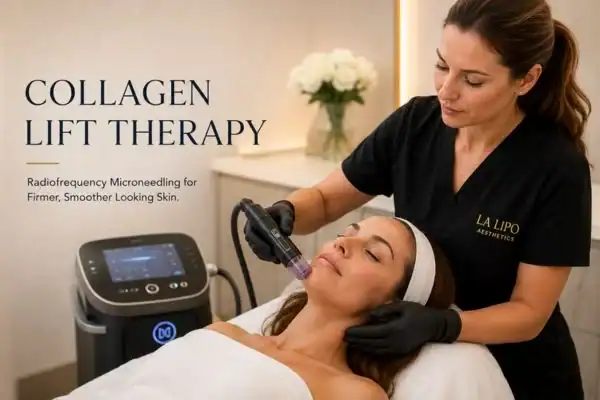
At LA LIPO, we use Collagen Lift Therapy to refer to our RF microneedling treatment.
It may be considered by people who would like to discuss cosmetic concerns such as:
- Fine lines and wrinkles
- Uneven-looking skin texture
- Mild loss of skin firmness
- Certain changes in the appearance of ageing skin
Not every concern can be treated effectively with the same procedure.
Before recommending treatment, the practitioner should review your medical history, assess the proposed treatment area and discuss what you can reasonably expect.
You should also have the opportunity to ask about the equipment used, potential complications, treatment costs and any recovery requirements.
What Happens During an RF Microneedling Liverpool Appointment?
Before treatment
Your practitioner should begin with a consultation and suitability assessment.
This should cover your medical history, current medication, previous cosmetic procedures and any skin concerns that could affect treatment.
You should receive information about possible side effects, the expected recovery process, and the procedure’s limitations.
During treatment
The skin is prepared according to the device manufacturer’s treatment protocol.
A topical anaesthetic may be used where appropriate.
The practitioner then uses the RF microneedling device on the selected area, adjusting the treatment parameters based on the equipment and an individual assessment.
You may feel pressure, warmth or discomfort during the procedure.
After treatment
The treated skin may appear red or swollen and can feel sensitive.
Your practitioner should provide written aftercare instructions, including advice about skincare products, sun exposure and when to resume normal activities.
Recovery varies, and you should not assume that the skin will look or feel normal immediately afterwards.
How Long Does RF Microneedling Liverpool Take to Show Results?
RF microneedling does not produce an immediate surgical lifting effect.
Clinical studies generally assess changes over the weeks and months following treatment.
However, no reliable timetable applies to every person.
Some individuals may notice changes in skin appearance, while others may see limited improvement.
Discuss the number of sessions, treatment intervals, and likely outcomes during your consultation.
It is also worth asking whether any maintenance treatment might be proposed and what evidence supports that recommendation.
What Are the Risks and Side Effects of RF Microneedling Liverpool ?
RF microneedling involves needles and radiofrequency energy, so it is important to understand the potential complications before deciding to proceed.
What Might Your Skin Feel Like After Treatment?
It’s quite normal for the skin to look a little red or feel sensitive following RF microneedling. Some people notice mild swelling or tenderness, while others may experience small areas of bruising or tiny spots of bleeding where the needles have entered the skin.
Your skin might also feel dry, slightly rough or tighter than usual as it begins to recover.
These effects often improve over the following days, although everyone heals differently. Your practitioner should explain what to expect and when any symptoms may need further attention.
More serious complications
RF microneedling can also cause complications that require medical attention.
Reported risks include burns, infection, scarring, pigmentation changes, damage to underlying fat tissue and nerve injury.
In October 2025, the US Food and Drug Administration issued a safety communication following reports of serious complications associated with certain uses of RF microneedling devices.
Although these reports do not establish how frequently complications occur, they highlight why appropriate treatment selection, practitioner competence and device settings matter.
Seek medical advice if you develop increasing pain, worsening swelling, spreading redness, signs of infection or other unexpected symptoms after treatment.
Who Might Not Be Suitable for RF Microneedling Liverpool?
RF microneedling is not appropriate for everyone.
Certain circumstances may mean treatment needs to be postponed, modified or avoided.
These can include:
- Active infections or inflammation in the proposed treatment area
- Certain medical conditions affecting healing
- A history of problematic scarring
- Some medications or treatments that affect the skin
- Pregnancy, depending on device guidance and clinical assessment
- Certain implanted electronic or metallic devices
- Previous cosmetic procedures that may affect the treatment area
This is not a complete list of contraindications.
The manufacturer’s instructions, individual medical history and appropriate professional assessment should guide suitability decisions.
Do not stop prescribed medication to undergo a cosmetic procedure without advice from the prescribing healthcare professional.
Are There Alternatives to RF Microneedling Liverpool?
RF microneedling is only one option for managing concerns about ageing skin.
Depending on your goals, alternatives may include skincare, other professionally administered cosmetic procedures or choosing not to have treatment.
Daily sun protection
Regular use of broad-spectrum sunscreen can help protect the skin against further UV-related damage.
Skincare
The products you use at home can also affect how your skin looks and feels. Ingredients such as retinoids may help soften the appearance of fine lines and improve uneven skin texture caused by sun exposure.
What works well for one person’s skin won’t necessarily work for someone else’s. Some ingredients can leave the skin feeling dry, tight or irritated, especially if it’s already sensitive. It’s worth introducing new products gradually and paying attention to how your skin responds.
What About Other Cosmetic Treatments?
Different technologies and procedures may be considered for particular concerns.
These are not necessarily interchangeable, and each has its own evidence, limitations and potential complications.
If you are unsure which approach is appropriate, an assessment with a suitably qualified healthcare professional can help you understand your options.
When Should You Seek Medical Advice About Skin Changes?
Not every change in skin appearance is caused by normal ageing.
A new or changing mole, unexplained bleeding, persistent crusting or an unusual skin lesion should be assessed by a healthcare professional.
Do not use cosmetic procedures to treat an unidentified or suspicious lesion.
If you’re concerned about a changing area of skin, contact your GP before considering cosmetic treatment.
Is RF Microneedling Liverpool Right for You?
Choosing a cosmetic treatment is a personal decision.
RF microneedling has been studied for wrinkles, fine lines, texture, and certain degrees of skin laxity, but research shows it doesn’t benefit everyone.
The best place to start is a consultation that considers your skin concerns, medical history, and expectations.
At LA LIPO, you can contact our team to ask about Collagen Lift Therapy, discuss the assessment process and find out whether the treatment may be suitable for you.
Contact LA LIPO to enquire about a consultation.
Frequently Asked Questions About RF Microneedling Liverpool
1. Will my wrinkles come back after RF microneedling?
RF microneedling may help make some fine lines and wrinkles less noticeable, but the effects aren’t permanent. Your skin will continue to age naturally, and factors such as sun exposure can affect your results.
How much improvement you see, and how long it lasts, will differ from person to person. Set realistic expectations, as some wrinkles may show little or no improvement after treatment.
2. Can RF microneedling Liverpool tighten loose skin around the jawline?
It may improve the appearance of mild skin laxity in some suitable individuals. However, it cannot remove significant excess skin or reproduce the lifting effects of surgery.
3. Is RF microneedling the same as Morpheus8?
Morpheus8 is a branded RF microneedling system. RF microneedling is the broader technology used by different devices and manufacturers.
LA LIPO offers RF microneedling under the treatment name Collagen Lift Therapy. Do not confuse it with treatment using the branded Morpheus8 device.
4. Is RF microneedling painful?
Some discomfort can occur because the procedure involves needles entering the skin and delivering radiofrequency energy.
The level of discomfort varies. Your practitioner should explain what to expect and whether topical anaesthetic is appropriate.
5. How many RF microneedling sessions will I need?
No fixed number suits everyone. Recommendations depend on the area being treated, the equipment, individual skin characteristics and the treatment goals.
Your practitioner should explain any proposed treatment course before you commit.
6. Can RF microneedling damage facial fat?
Fat tissue damage has been reported as a complication associated with certain uses of RF microneedling.
The FDA has highlighted reports involving fat loss, burns, scarring and nerve damage. Discuss these risks with your practitioner before treatment.
7. Can RF microneedling be used on darker skin tones?
RF microneedling may be considered for people with different skin tones, but suitability requires individual assessment.
Pigmentation changes and other complications can occur, so choose treatment settings based on the person’s skin characteristics.
8. How long will my skin stay red after RF microneedling?
It’s common for your skin to look red or flushed after RF microneedling, similar to a mild sunburn. For many people, this fades within a few days, although some may find their skin takes longer to settle.
If the redness worsens rather than improves, particularly if you notice increasing pain, warmth, swelling, or discharge, seek medical advice. Your practitioner should also provide clear aftercare instructions so you know what’s normal during recovery and what might need checking.
9. Can I wear makeup immediately after RF microneedling?
You may need to avoid makeup for a period after treatment while your skin recovers.
Follow the written instructions your practitioner provides rather than assuming you can apply makeup immediately.
10. What should I ask before booking RF microneedling?
Ask which device will be used, who will perform the procedure, what training they have received, what results are realistically achievable and which complications may occur.
You should also understand the total cost, proposed number of sessions, recovery requirements and arrangements for managing complications.
Important information: This article provides general information about RF microneedling and cosmetic skin treatments. It does not replace individual medical advice or a professional suitability assessment. RF microneedling carries risks, including burns, infection, scarring, pigmentation changes, fat tissue damage and nerve injury. Not everyone is suitable for treatment, and no particular cosmetic result can be guaranteed. Anyone considering treatment should discuss the potential benefits, limitations, contraindications and complications with an appropriately trained professional before proceeding.
For Further Information, Please Call Us ON 03300 100 238